
Battle for Seconds Defines the Regional Rally
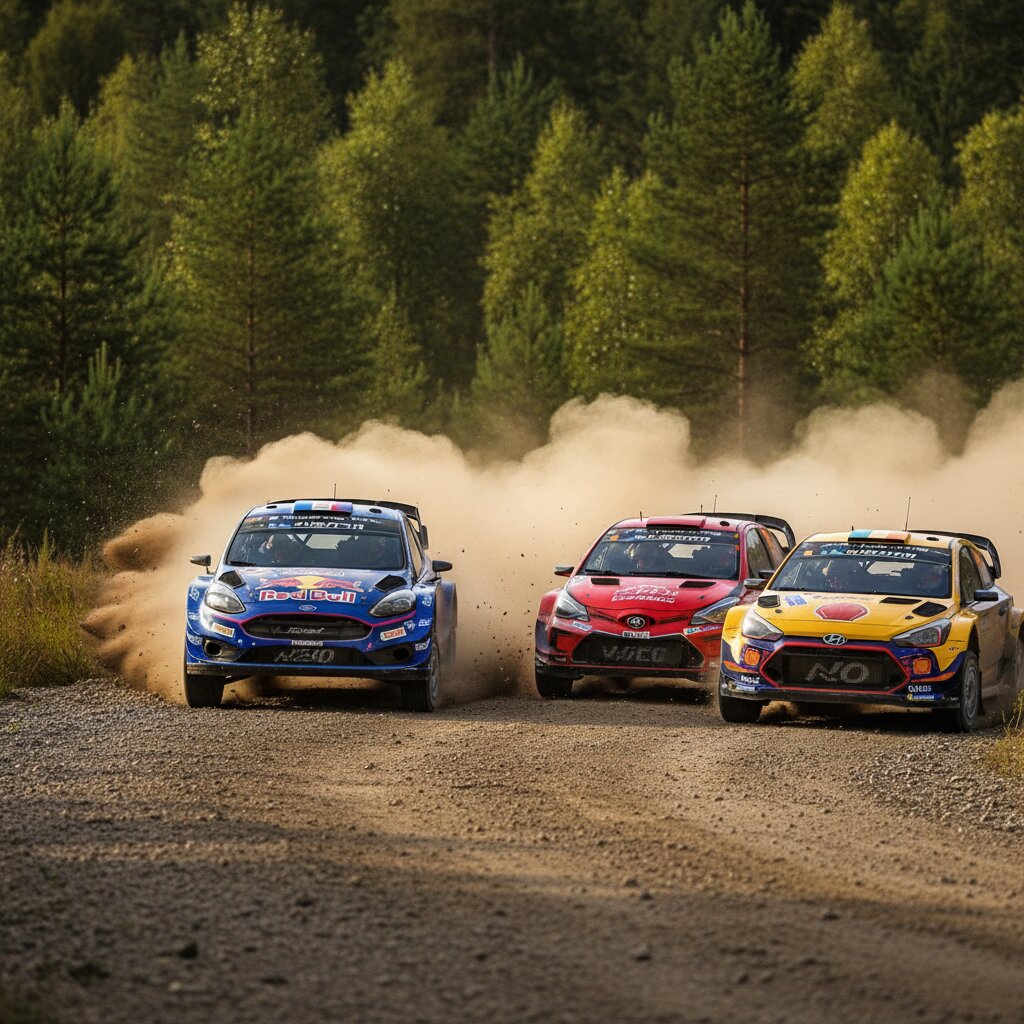
The fight for the overall victory often grabs the headlines, but the true intensity of motorsport usually hides further down the timing sheets. At the recent regional rally, the midfield battle delivered a spectacular display of precision, nerve, and relentless competition. Drivers pushed their machines to the absolute limit, knowing that a single mistake could cost them multiple positions. The focus of the weekend shifted away from the leaders and toward a group of competitors separated by mere fractions of a second.
The regional event serves as a crucial proving ground for rising talent and established veterans alike. Competitors face punishing gravel roads, blind crests, and unpredictable weather conditions that demand total concentration. Success at this level provides a stepping stone to national championships. Every stage offers a chance to prove one can handle the pressure, making the fight for positions outside the top three incredibly fierce.
While fans often watch the leaders, team managers and sponsors keep a close eye on the midfield battle. Securing a top-ten finish translates directly into championship points, better national rankings, and increased media exposure. For privateer teams operating on tight budgets, scoring consistent points ensures survival and future funding. A driver who can claw back five seconds to secure seventh place demonstrates the exact fighting spirit that factory teams look for when scouting new talent.
Throughout the weekend, small time gaps shaped the narrative of the event. After fifty kilometers of flat-out driving, the difference between fifth and ninth place stood at just four seconds. Such tight margins mean a driver cannot afford to brake a meter too early or take a slightly wider line through a hairpin. Every gear shift and every steering input must be flawless. The timing screens lit up with green and red indicators as cars crossed the flying finish, constantly shuffling the running order.
A few key drivers emerged as the main protagonists in this intense fight. Marcus Thorne and Elena Rostova traded times all weekend, matching each other sector by sector. Thorne relied on a smooth, flowing driving style to carry momentum through the fast sweeping bends. Rostova took a much more aggressive approach, throwing her car into corners and relying on mechanical grip to pull her out. Despite their different techniques, their stage times were nearly identical.
The realistic time differences between these competitors created a thrilling spectacle. On stage four, Rostova took back two seconds from Thorne, moving ahead of him in the overall classification by a single tenth of a second. Two stages later, Thorne responded by outperforming her by three tenths. This constant swapping of positions kept team personnel glued to the live timing systems. Neither driver had the luxury of pacing themselves; they had to drive at maximum attack from the first control to the final stop sign.
Key moments of gains or losses often came down to minor details. A slight hesitation over a blind crest could cost half a second. Taking too much speed into a tight square left could push the car wide into the loose gravel, sapping momentum and costing precious time. During the second pass of the infamous forest stage, Thorne encountered a patch of unexpected mud. He managed to keep the car out of the trees, but the slide cost him two vital seconds. In a midfield battle this tight, two seconds feels like a lifetime.
When speaking at the service park, competitors highlighted the immense mental toll of the event. "The pressure is constant and you cannot relax for a moment," stated Thorne while mechanics changed the tires on his car. "If you lose concentration and drop one second, three cars will pass you in the standings. You must be perfect." Rostova echoed his sentiments, adding, "We are driving right on the edge of disaster. Finding the balance between raw speed and bringing the car home is the hardest part of this sport."
Technical challenges also played a massive role in influencing performance. The rough gravel stages tore chunks of rubber from the tires, forcing drivers to manage their grip levels carefully. Suspension setups required constant adjustment. Teams had to decide whether to soften the dampers to find more traction over the bumps or stiffen them to improve responsiveness in the high-speed sections. A suboptimal setup decision could easily drain a second per kilometer, ruining any chance of maintaining position.
These technical demands led to varying strategies among the crews. Some drivers chose to take massive risks on the smoother stages, hoping to build a buffer of time. Others opted for a strategy based purely on consistency, trusting that their rivals would eventually make an error or suffer a mechanical failure. The teams that correctly predicted the stage conditions and adapted their setups reaped the rewards, while those who guessed wrong fell down the order.
Ultimately, the impact of mistakes and the necessity for precision driving defined the outcome. A stalled engine at a hairpin junction or a slight brush with a rock face separated the successful campaigns from the disappointments. The drivers who managed to block out the pressure and execute their pacenotes perfectly secured the valuable points.
Looking Ahead to the Next Rounds
As the teams pack up their equipment and head home, the championship standings look tighter than ever. The intense fights witnessed during this event have set the stage for a spectacular season. Drivers know they must find ways to extract even more speed from their cars before the next gathering. If this regional event provided any indication of the future, fans can expect the battle for points to remain fierce, unpredictable, and entirely dependent on those crucial fractions of a second.